Press Release: New National Survey of Small Businesses: Fraud, Scams and Ransomware Impose a $131 Billion “Hidden Tax” on Main Street
FOR IMMEDIATE RELEASE
Media Contact:
Nazirah Ahmad
nazirah@emccommunications.com
New National Survey of Small Businesses: Fraud, Scams and Ransomware Impose a $131 Billion “Hidden Tax” on Main Street
First-of-its-kind national survey commissioned by the Public Private Strategies Institute (PPSI) also found that 71% of small business owners fear AI will make fraud, scams and ransomware attacks more frequent.
Washington, D.C. — April 9, 2026
As Americans prepare to file their 2025 tax returns ahead of the April 15 deadline, a first-of-its-kind national survey of more than 500 small business owners reveals that America’s small businesses are paying a staggering $131 billion annual “hidden tax” due to fraud, scams, and ransomware. The survey, conducted by Morning Consult for the Public Private Strategies Institute, also found that AI is increasing the risk: 71% of small business owners fear AI will make attacks more common while fewer than half (44%) of businesses feel prepared to respond to the most frequent types of attacks.
Fraud, scams, and ransomware are draining revenue, slowing growth, and forcing entrepreneurs to divert time and resources away from serving customers and expanding their businesses. For the first time, PPSI’s national survey quantifies the real financial losses due to fraud, scams, and ransomware accrued each year by America’s small business community.
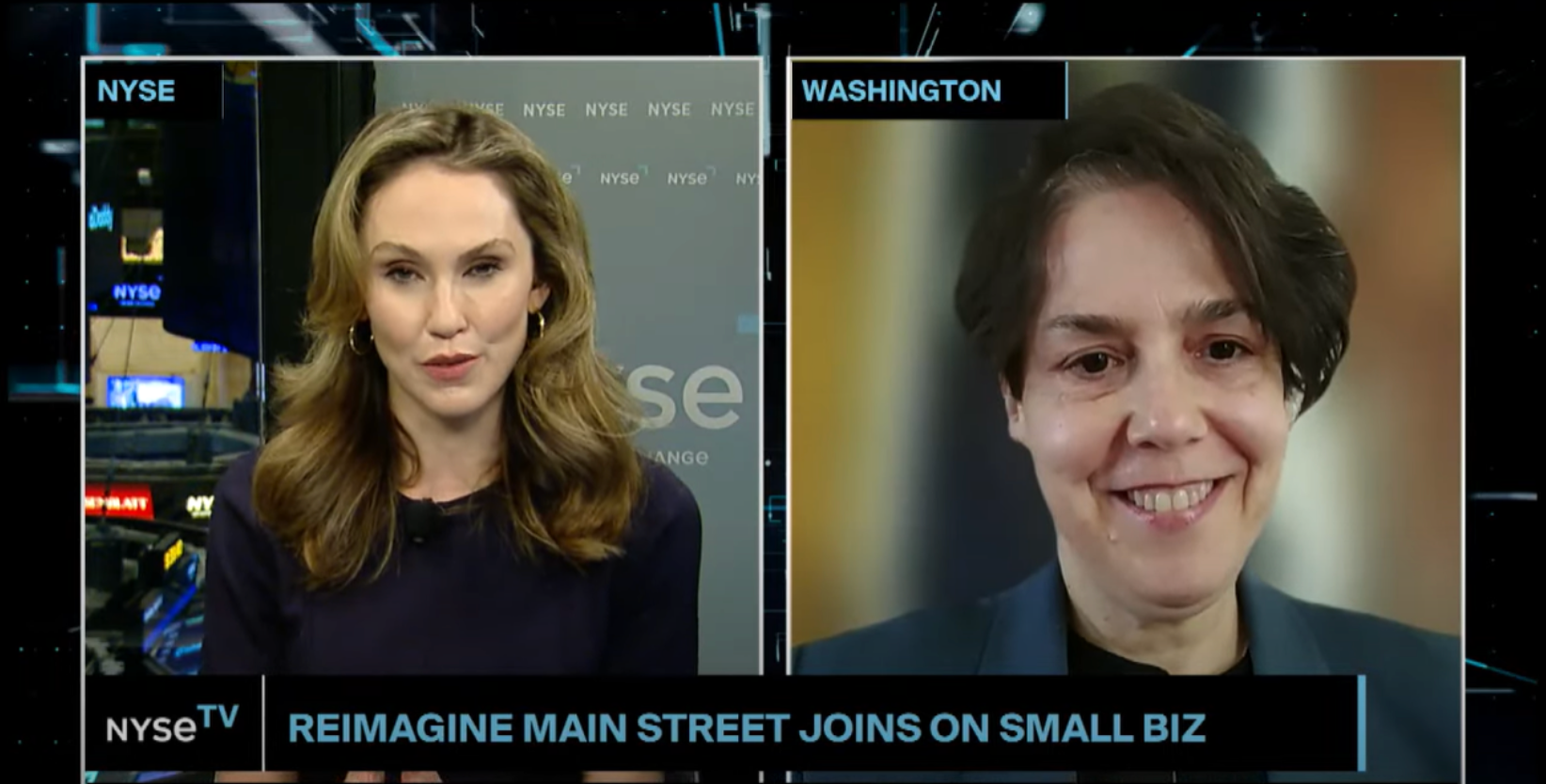
“When nearly three in four small businesses experience fraud or ransomware in a single year, this is no longer an isolated risk. It has become a routine cost of doing business,” said Tammy Halevy, Executive Director of Reimagine Main Street, a project of PPSI. “At that scale, fraud functions like a hidden tax on entrepreneurship. That’s money that should be going toward hiring, innovation, and growth, not to criminals.”
The
survey also found that:
- Widespread Impact: Nearly three in four (72%) of small businesses were hit by fraud, scams, or ransomware last year.
- Material Losses: Credit card/payment fraud and email phishing are the most frequently reported attacks. For affected businesses, the financial damage is significant — averaging nearly $60,000 for payment fraud and more than $90,000 for email compromise.
- Constrains Growth: Fraud doesn’t just drain revenue; it slows growth. Small businesses say these threats make it harder to accept payments (43%), attract and retain customers (40%), and innovate or develop new products (39%).
- AI Increases the Threats: Seven in ten (71%) small business owners say AI will make fraud and ransomware more common, with 76% of victims reporting that AI was used in their attacks.
Fraud Defense Is a Shared Responsibility
The scale of the fraud threat means that small businesses cannot shoulder this burden alone.
Most take action when incidents occur — and reporting often leads to meaningful resolution. Among businesses that experienced fraud, 77% say they reported it. Of those who reported, 54% say the matter was fully resolved and another 33% say it was partially resolved.
However, business owners see fraud prevention as a shared responsibility. A majority say business owners themselves (51%), payment platforms (51%), and financial institutions (50%) are “very responsible” for preventing and protecting against fraud.
When asked what shapes their view of responsibility, three factors stand out in nearly equal measure: who has the best visibility into threats (39%), who has control over business operations (37%), and who has the legal authority to prevent attacks or punish bad actors (37%).
For guidance on prevention, small businesses most often turn to online resources (46%), financial institutions (42%), and cybersecurity companies (39%) — underscoring the need for clear, accessible support from trusted partners.
“This survey makes one thing clear: small businesses are doing their part, but as AI and other disruptive technologies emerge they cannot fight this battle alone,” said Rhett Buttle, President of the Public Private Strategies Institute. “Reducing this hidden tax on entrepreneurship will require stronger coordination between the private sector and policymakers. When small businesses are protected, they can focus on what they do best — creating jobs, serving customers, and driving growth.”
Awareness Outpaces Preparedness
While 63% of small businesses say cyber threats are a serious problem, far fewer feel prepared for the most frequent attacks. Only 44% say they are well-prepared for payment fraud, and 41% feel prepared for business email compromise. Just 31% feel prepared for social engineering scams. And while ransomware is less common, fewer than one in three businesses (30%) say they are ready to respond to an attack.
“Most small business owners say, ‘I'm so small, why would they target my company?’ We are not immune. A ransomware attack shut down my 116-year-old manufacturing business for nearly a week during our busiest season and cost over $100,000 to clean up,” said Walt Rowen, President of Susquehanna Glass Company in Columbia, PA. “There are simple things you can do to protect yourself, and every business should be doing them. If this is a problem today, it's going to be 10 times worse tomorrow.”
Most Effective Tools Not the Most Widely Used
Fewer than half of small businesses (48%) use multi-factor authentication, yet among those that do, 70% say it is very effective. Similarly, only 24% carry cyber insurance, even though 61% of policyholders say it is very effective. And while just 31% conduct regular security audits, 58% of those who do say they are very effective.
This national survey was fielded by Morning Consult between December 19 - 29, 2025 among a sample of 506 small business owners in the United States (0 to 500 employees). The data was weighted to approximate a target sample of small businesses based on enterprise size, NAICS industry grouping, and region. The result have a margin of error of plus or minus 4 percentage points.
For more information about the survey and its findings, visit
https://www.ppsi.org/insights/fraud-scams-ransomware-survey
###
About Public Private Strategies Institute
The Public Private Strategies Institute (PPSI) is an independent research and education organization. PPSI engages in educational activities concerning the public and private sectors’ roles in advancing societal change. PPSI explores best practices and trends through research, publications, and educational events. Additionally, it produces educational and informational content that will educate public and private sector actors about their capacity to be agents of social change; and conduct research into the existing landscape of public and private social responsibility and the potential for the future. For more information, please visit
ppsi.org.
About Reimagine Main Street
Reimagine Main Street, a project of the Public Private Strategies Institute, is a multi-stakeholder, cross-sector initiative that brings small business leaders, investors, experts, and policymakers together with business owners and the people they employ. We engage diverse stakeholders and develop data-driven insights to shape and inform market opportunities and policy. For more information, please visit
reimaginemainstreet.org
WANTING MORE NEWS? SIGNUP TODAY
Contact Us
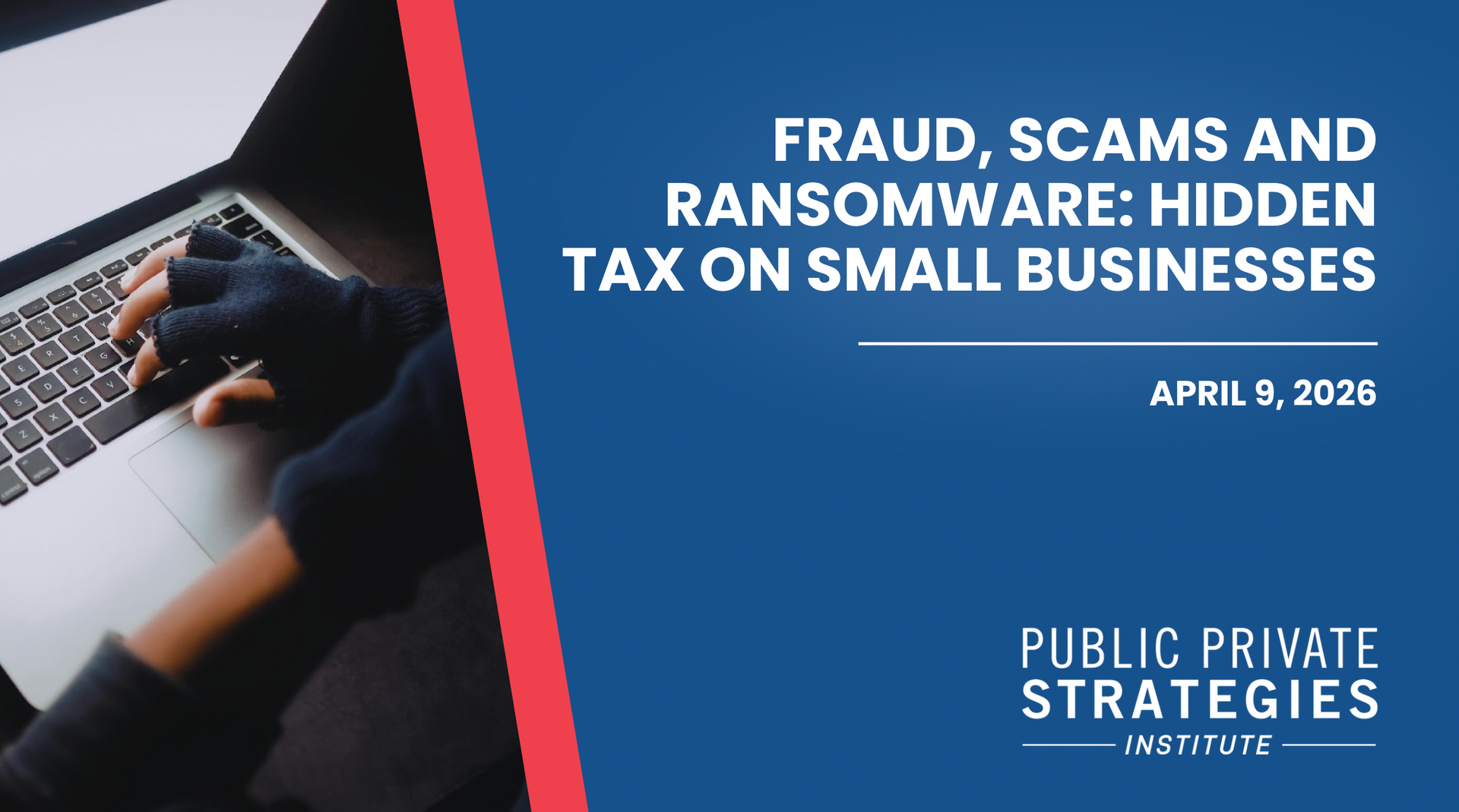
ICYMI: Fraud, Scams, and Ransomware Impose a $131 Billion “Hidden Tax” on America’s Small Businesses